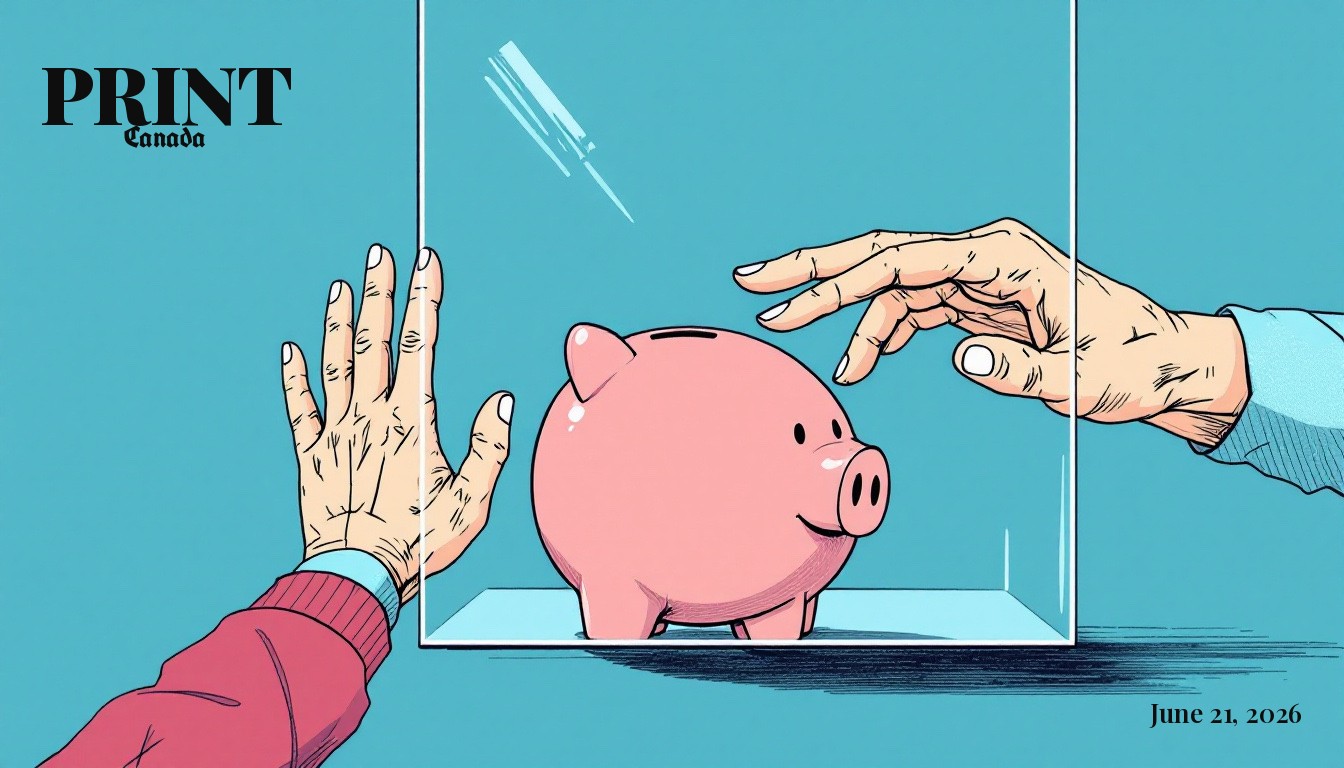
She asked for two thousand, five hundred dollars of her own money.
On October 20, 2025, a 72-year-old woman called her insurance company to withdraw $2,500 from her own Registered Retirement Income Fund. She was told it would arrive within a week. It did not arrive. Nine case numbers were opened over the following month. Callbacks were promised and not made. The company cited connection problems, on their end. Three months later, the company sent her a letter admitting it was their fault, offering $5,000, and requiring her to sign away every legal right she had in exchange.
Kitchener, Ont.The first call lasted long enough to hear the words "within a week." October 20, 2025. A 72-year-old woman, calling the insurance company that held her retirement savings, asking to withdraw two thousand, five hundred dollars of money she had spent her working life contributing. Within a week. She thanked the agent and hung up.
A week passed. The money did not arrive.
She called back. A new case number was opened. A callback was promised. The callback did not come. She called again. Another case number. Another promise. The company's records of these calls, later produced in disclosure, show a pattern: each new call was handled by an agent with no awareness of the previous call, despite an accumulating string of internal case numbers that should have connected them. By November 21, nine case numbers had been opened on a single $2,500 request.
On that ninth call, an agent told her, on the recorded line, that her request had not been processed "right away because there was a duplicate request." Someone had sent a duplicate. The company had noticed. The company had sent an email to its internal team asking them to address it. Nobody responded to the email. The withdrawal did not happen. This explanation came six weeks after the original call.
Nine case numbers. Six weeks. Zero dollars transferred. The problem was an internal email no one responded to. The woman is 72. The money was hers.
The letter
On February 24, 2026, four months after the first call, the company sent a letter. The letter is remarkable in its directness. It acknowledges reviewing "all call recordings, transcripts, and internal handling records." It confirms the failure was, in its own words, "an administrative error on our part." It thanks her for raising the matter. It offers five thousand dollars.
Attached to the five thousand dollars is a condition: a full and final release of every claim, legal right, and cause of action she might have arising from the matter. Not an apology and a payment. An apology, a payment, and a requirement that she permanently surrender the ability to pursue any further recourse. The company admitted its error in writing and then asked her to sign a document extinguishing her rights as the price of a partial remedy.
She declined.
What happened while she was waiting
In one of the recorded calls, she said: "I lost the car... I lost the hold on the car because of this." The withdrawal she was waiting for was connected to a vehicle purchase. While the money sat unprocessed in an account the company had already confirmed belonged to her, the opportunity it was earmarked for slipped away. She had to find another solution. That solution had costs of its own. Those costs were foreseeable. The company knew, from the first call, what the withdrawal was for.
In another call she tried to explain the urgency. The connection dropped. The company's records note "connection/cutting out" as recurring across multiple calls. The connection issues were on the company's end. She kept calling back. The case numbers kept accumulating. The money stayed where it was.
The verdict
A 72-year-old retiree asked for her own money. The company kept it for three months through its own internal failure. It admitted the failure in writing. It offered partial compensation in exchange for total silence. This is a company that manages the retirement savings of millions of Canadians. What it offered a woman who caught it failing and refused to stay quiet was five thousand dollars and a pen. She handed the pen back.
The settlement conference is August 20, 2026. The claim is fifty thousand dollars, the maximum this country allows in a small claims court. The company's own letter is exhibit one.