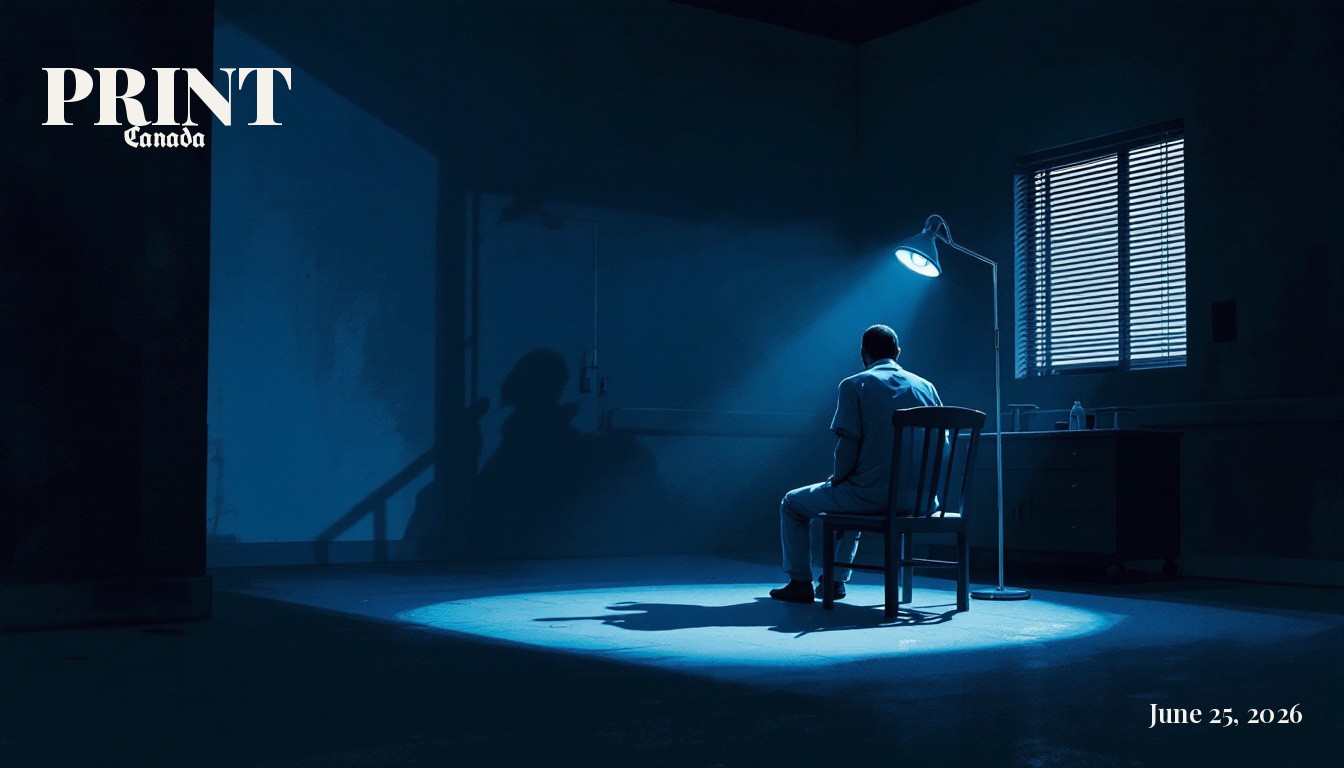
Eight hours in the emergency room, and no diagnosis.
Four hours just to get through intake. Eight hours from arrival to discharge. No diagnosis at the end of it, and a stack of follow-up appointments to chase instead. Canada's health care is rightly praised for being free at the point of care. Free is not the same as accessible, and the hospitals are overflowing.
Ontario.It took four hours just to get through intake. Eight hours from walking in to being discharged. And at the end of all of it, no diagnosis. What the patient left with instead was a list of more than ten follow-up appointments to book and chase, somewhere else, later, on their own. They were not turned away. They waited the better part of a working day in an emergency department and went home knowing no more about what was wrong than when they arrived.
The thing to understand is that this is not a story about one bad night at one hospital. It is the system performing exactly as it now performs.
The wait is the statistic, made personal
In 2024 and 2025, ninety per cent of patients in Ontario emergency rooms waited about four and a half hours just for an initial assessment by a physician. Five years earlier, in 2020 and 2021, that figure was two and a half hours. The wait to so much as be seen has climbed by roughly two thirds in half a decade. The four hours at intake is not bad luck. It is the median experience now, the thing the province's own numbers describe.
For anyone sick enough to be admitted, it gets far worse. Patients admitted to hospital through the emergency department have spent, on average, around twenty hours in the ER before a ward bed opened up. One in ten admitted patients waited more than forty-eight hours. Two full days, in a hallway or a chair, before the hospital that admitted you could find you a bed inside it.
Ninety per cent of Ontario emergency patients now wait about four and a half hours just to be seen, up from two and a half five years ago. The eight-hour visit is not an outlier. It is the design, under load.
When the answer is to stop counting
Here is the detail that should anger people. As emergency departments overflow and patients are treated in hallways and storage rooms, what officials call unconventional spaces, Ontario moved to retire the very metric that tracks it. The measure of how many patients are being cared for in hallways was listed among performance measures to be dropped. Doctors said plainly what this is: you do not empty a hallway by deleting the number that counts the people in it. When a system responds to a worsening problem by no longer measuring it, that is not management. That is concealment.
Why the emergency room is full
The emergency department has become the place the rest of the system overflows into. Admitted patients cannot move up to wards because the wards are full. The wards are full in part of patients who are well enough to leave but have nowhere to go, because long-term care beds and home and community supports do not exist in the numbers needed. So the ER functions as a boarding house for a hospital that has no room, and the people arriving with new emergencies wait behind all of it.
And at the front of the system, the family doctor, the person who is supposed to keep people out of the emergency room in the first place, is vanishing. Roughly two and a half million Ontarians do not have a family physician. More than half of the family doctors who remain have said they are considering leaving the work within five years, and fewer than half of medical students say they would choose family medicine at all. When millions of people have no doctor to call, the emergency room becomes the doctor of last resort for problems it was never built to handle, which is part of why a person can spend eight hours there and leave with a referral instead of an answer.
Free, and that matters, but not the same as accessible
None of this is an argument against the principle. The thing Canadians are proud of is real and worth defending: the patient who waited eight hours did not also receive a bill that could bankrupt them, did not have to phone an insurer for permission, did not have to choose between care and rent. Compared with a system that turns the sick away at the cashier, that is a genuine achievement, and it should not be surrendered.
But free at the door is not the same as care you can actually reach. A right to treatment that takes four hours to begin, eight hours to end, resolves nothing, and sends you into a maze of follow-ups you must navigate without a family doctor to guide you, is a right under severe strain. The pride is earned. The complacency the pride produces is not. You can be grateful that the visit cost nothing and still say, plainly, that a system which keeps a sick person waiting most of a day and hands them no answer is failing them.
The verdict
Eight hours. No diagnosis. A list of appointments to chase alone. That is what a celebrated, universal, no-cost health care system delivered to one patient on one ordinary day, and the numbers say it is delivering versions of it to people across the province every day. The hospitals are not failing because care is free. They are failing because the capacity behind the principle, the beds, the doctors, the long-term care, the home support, has not been built or funded to match the need, and because when the strain shows, the instinct has been to stop publishing the measurement rather than fix the thing it measured. Free care is a promise this country made and should keep. Right now it is keeping the promise on paper and breaking it in the waiting room.
This is an opinion essay grounded in a documented patient experience and in publicly reported Ontario health system data as of 2025 and 2026, including emergency department wait time figures and the family physician shortage. The patient and hospital are not identified. General commentary, not medical advice.