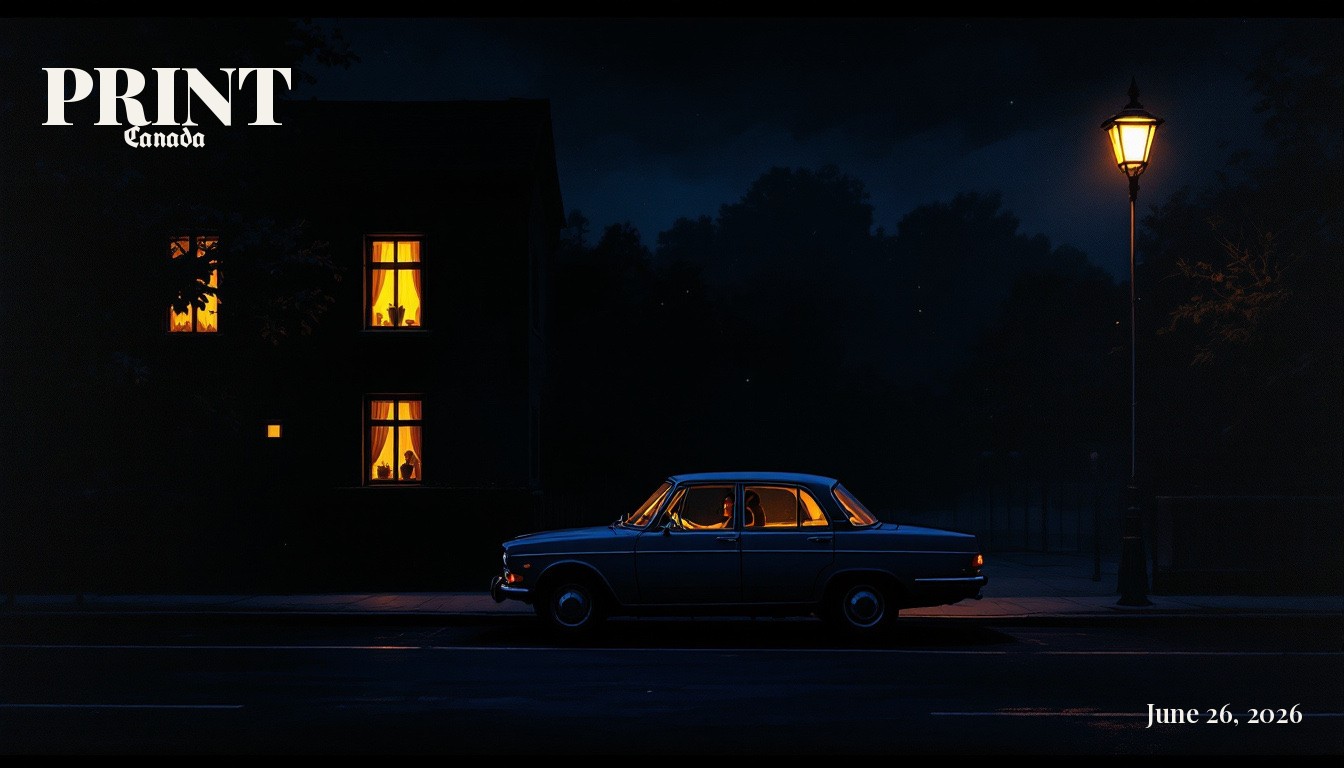
The car that quietly became a mobile home.
Climate control that runs all night. A camp setting that turns the back seat into a bedroom. A mode that keeps the dog safe and tells the parking lot so. A tow hook for the trailer, and software that steers itself toward the next place. Somewhere in the last few years the family electric crossover stopped being only a car. It became a small house you can move. That is genuinely wild, and it is also a quiet sentence about the country it parks in.
Toronto.Consider what the ordinary electric crossover in the driveway can now do, and try to do it with fresh eyes, the way you would if someone had described it to you ten years ago. It will hold its own temperature through an entire night while parked, warm in February, cool in July, running quietly off its battery without the engine that no longer exists. It will keep that air comfortable for a sleeping dog while the owner steps into a store, and it will say so, in plain numbers on the screen facing the glass, so the stranger walking past does not panic and break the window. Fold the rear seats flat and there is a bed. Add a hitch and it will pull a trailer. Point it down the highway and, under supervision, it will hold its lane and its distance and largely drive itself toward wherever you are going.
Put those abilities in one place and the category quietly breaks. That is not a car in the sense your grandfather meant. It is a climate-controlled, self-propelled room with a bed in it. It is, functionally, a modern mobile home that happens to look like a commuter SUV.
What the gadgets actually are
Strip the marketing language off and the features are almost startlingly domestic. There is a camp setting, built for staying inside the parked car, that keeps the cabin at a set temperature all night, keeps the screen alive for music or a film, and feeds power to the outlets and USB ports so phones and a small fridge stay charged. On a typical night it draws something like one per cent of the battery an hour, perhaps eight to fifteen per cent by morning depending on the cold. You wake up, the room is warm, and the house still has most of a tank of road left in it.
There is a separate setting for the dog, made to hold a safe temperature for a pet for a short while, with the cabin temperature shown on the display precisely so a worried passerby understands the animal is fine. There is a lighter version for quick stops. None of this is exotic engineering anymore. It is a thermostat, a battery, and a screen, arranged with enough thought that a car can be lived in for a night the way a cabin can.
A climate-controlled room, with a bed, that powers your devices, keeps your dog safe, tows your gear, and drives itself toward the next place. We kept calling it a car because it has four wheels and a steering wheel. The wheels are the least interesting thing about it now.
The recreational vehicle, reinvented
For a certain kind of trip this is a small revolution, and it is worth letting the wonder sit before the worry arrives. The recreational vehicle, the motorhome, the towed camper, was always a wonderful and slightly absurd object: enormous, thirsty, expensive, parked eleven months of the year. The thing the family already owns to get to work now does a large share of what the motorhome did. Drive into the mountains, fold the seats, run the heat off the battery, sleep under the glass roof with the dog, charge the camera and the lights, wake up and let the car carry you, half by itself, to the next lake. Hitch a small trailer for the bikes and the gear and the range only grows. The barrier to wandering the country with a roof over your head used to be a second large purchase. Now, for a lot of people, it is a setting in a menu.
That is the wild part, and it is allowed to simply be delightful. A generation that could never afford an RV can, with the car it already financed, wake up somewhere beautiful, warm, and charged. Good. Genuinely.
The same machine, read a second way
But this is PRINT, and we cannot look at a car that is also a livable room without noticing the country it is parked in. Because the features that make this a joyful camper are the exact features that make it, for a growing number of Canadians, something heavier: a place to actually live. A warm, lockable, climate-held room you already own, in a country where a one-bedroom apartment has drifted out of reach, is not only a holiday. For some people it is the most house they can get.
We have written about that other version of this story: about the car as the last room the country left affordable, and about a man arrested for sleeping in a parked car outside his own home. The marvel and the warning live inside the same machine. The very engineering that lets a family sleep happily under the stars on vacation is the engineering that lets a person who has lost their housing survive a winter night in a parking lot. One society would look at that and celebrate the freedom. A more honest one would also ask why, for so many, the most advanced and dignified living space they can reach is the one with wheels.
The verdict
It is a marvel. Say that without hedging: the ordinary electric car has quietly absorbed the motorhome, the generator, the thermostat, and a chauffeur, and handed all of it to people who could never have bought those things separately. That deserves real wonder. It is also, in the same breath, a small mirror held up to the country, because a society reveals itself in what its cleverest objects end up being used for. We built a machine so capable it can be a home. The open question, the one worth keeping, is how many Canadians are reaching for that capability for the joy of it, and how many are reaching for it because nothing with a foundation will have them.
This is a feature essay. The vehicle capabilities described, overnight climate hold and a camp setting for sleeping inside the parked car, a pet setting that displays cabin temperature, roughly one per cent of battery drawn per hour in camp use, tow capability with the appropriate package, and supervised self-driving that still requires an attentive driver, reflect features publicly documented for current electric crossovers as of 2026. General commentary, not a product review or driving advice.