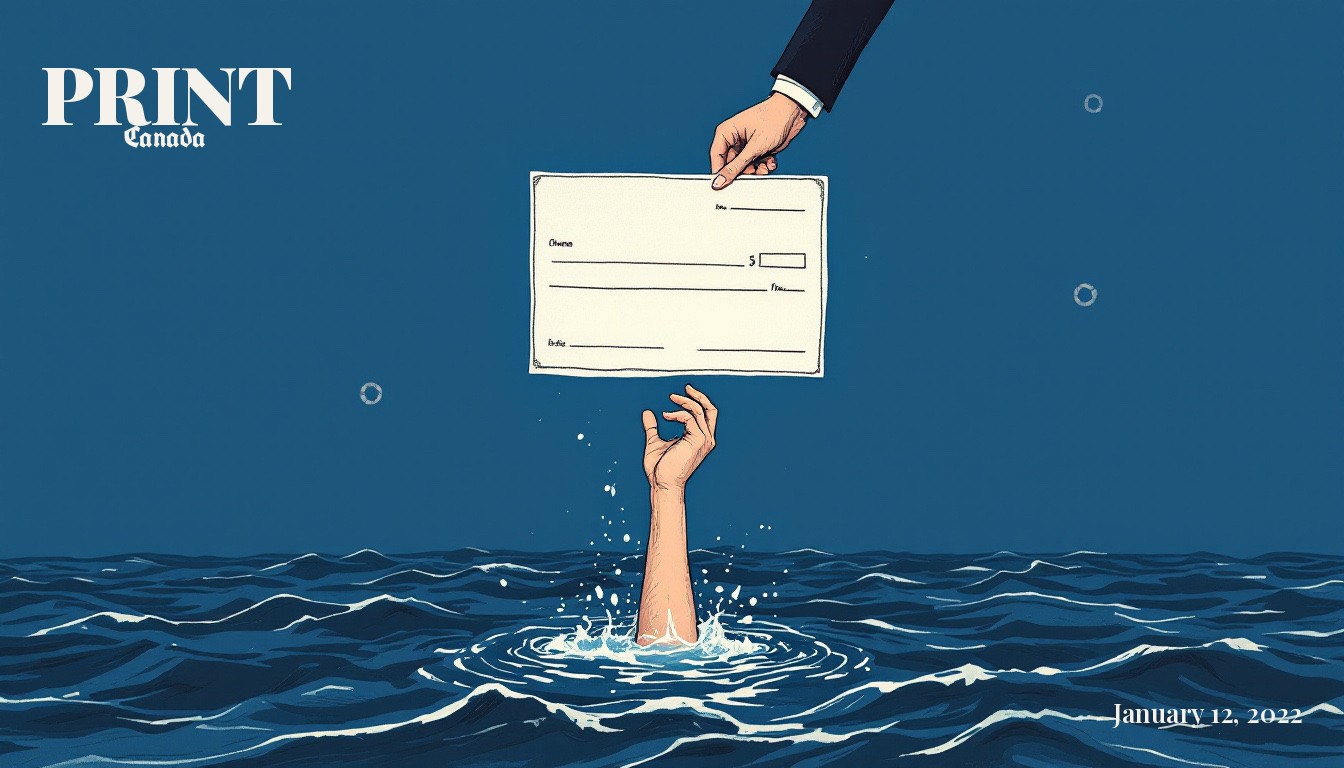
The emergency cheque the country asked for back.
In the spring of 2020 the government pushed money out the door fast to keep people fed and housed through a sudden shutdown, and told them not to worry about the paperwork yet. Then the letters came. The Canada Emergency Response Benefit kept the country standing, and for some of the most precarious people who took it, often following the government's own unclear instructions, it became a debt.
Ottawa.When the country shut down in March of 2020, the government did something genuinely right, and it should be said first and plainly. It moved fast. The Canada Emergency Response Benefit, two thousand dollars a month, was designed to reach people in days, not months, because people whose work had vanished overnight could not wait for a careful process. To make that speed possible, the system was built on trust: apply, attest that you qualify, and the money comes now. The verification would happen later. For millions of people, that benefit was the thing that paid the rent and bought the groceries in the most frightening stretch of the pandemic. It worked.
The trouble began with the word later. Because later arrived, and with it the letters.
The rule no one could read straight
To qualify for the benefit, a person needed to have earned at least five thousand dollars in the prior year. Simple enough, except for one group it was not. For the self-employed, the government's own guidance, on its website and from its call centres, was unclear in the early weeks about whether that five thousand meant gross income or net income, the amount before expenses or after. Many self-employed people, a gig worker, a hairdresser renting a chair, a cab driver, read it the way it was first presented, applied in good faith on their gross income, and received the benefit. Then, sometimes a year or more later, a letter arrived telling them they may not have qualified after all, and asking for the money back. Money that, being emergency money, had long since been spent on the emergency.
They followed the instructions the government gave them, took the emergency money, spent it on rent and food because that was the point, and then received a letter saying they had to give it back. The error was in the guidance. The bill went to the people who trusted it.
The partial fix, and who it missed
To its credit, the government eventually recognized the unfairness of this particular trap. It issued a remission order so that self-employed people who had qualified on gross income, and otherwise met the rules, would not have to repay. By its own estimate that covered roughly thirty thousand people, who had received on average around eight thousand dollars each. That is real relief and it mattered. But a remission order is a narrow door. It helped the specific group caught by the gross-versus-net confusion. It did less for the wider universe of low-income people who received repayment demands for other reasons, who now carried a government debt they had no capacity to pay, on benefits that had been pitched to them as relief.
The cruelty is in the timing
Set aside the cases of genuine fraud, which exist and are a separate matter. The ordinary case is this: a person at the bottom of the income ladder, told by their government to take help in a crisis, took it, used it to survive, and was later sent a collection letter. Interest relief was offered for a while, into 2022. The debts could, in the last resort, be discharged in a bankruptcy or a consumer proposal, which is to say the country built an off-ramp that runs through insolvency. For a person already living close to the edge, a four or five figure demand from the Canada Revenue Agency is not a line item. It is a crisis layered on the crisis the benefit was meant to solve. We have argued that the agency already knows most of what it needs to know about people's incomes; here is the cost of a system that asks first and reconciles later, when the later falls on the people least able to absorb it.
The verdict
The benefit was the right policy and it saved the country real suffering, and that should not be lost in the criticism. But a government that asks people to trust it in an emergency takes on an obligation when the emergency passes: to carry the cost of its own unclear instructions rather than push that cost onto the people who believed them. On the self-employed gross-income trap, it eventually, partly, did. On the broader principle, that emergency aid given in good faith should not become a debt that lands hardest on the poorest, the country mostly sent the letter and waited for the cheque. The next time it asks for trust in a crisis, the people who remember the letter will be slower to give it, and they will be right to be.
A retrospective published in 2026. Drawn from the public record: the Canada Emergency Response Benefit launched in 2020 on an attest-now, verify-later basis; the $5,000 income eligibility threshold and the early confusion in government guidance over gross versus net self-employment income; the Canada Revenue Agency's subsequent repayment letters; a remission order covering an estimated 30,000 self-employed people who had relied on gross income (averaging roughly $8,000 received); interest relief offered into 2022; and the treatment of CERB overpayments as debts dischargeable in insolvency. Commentary, not tax or financial advice.